
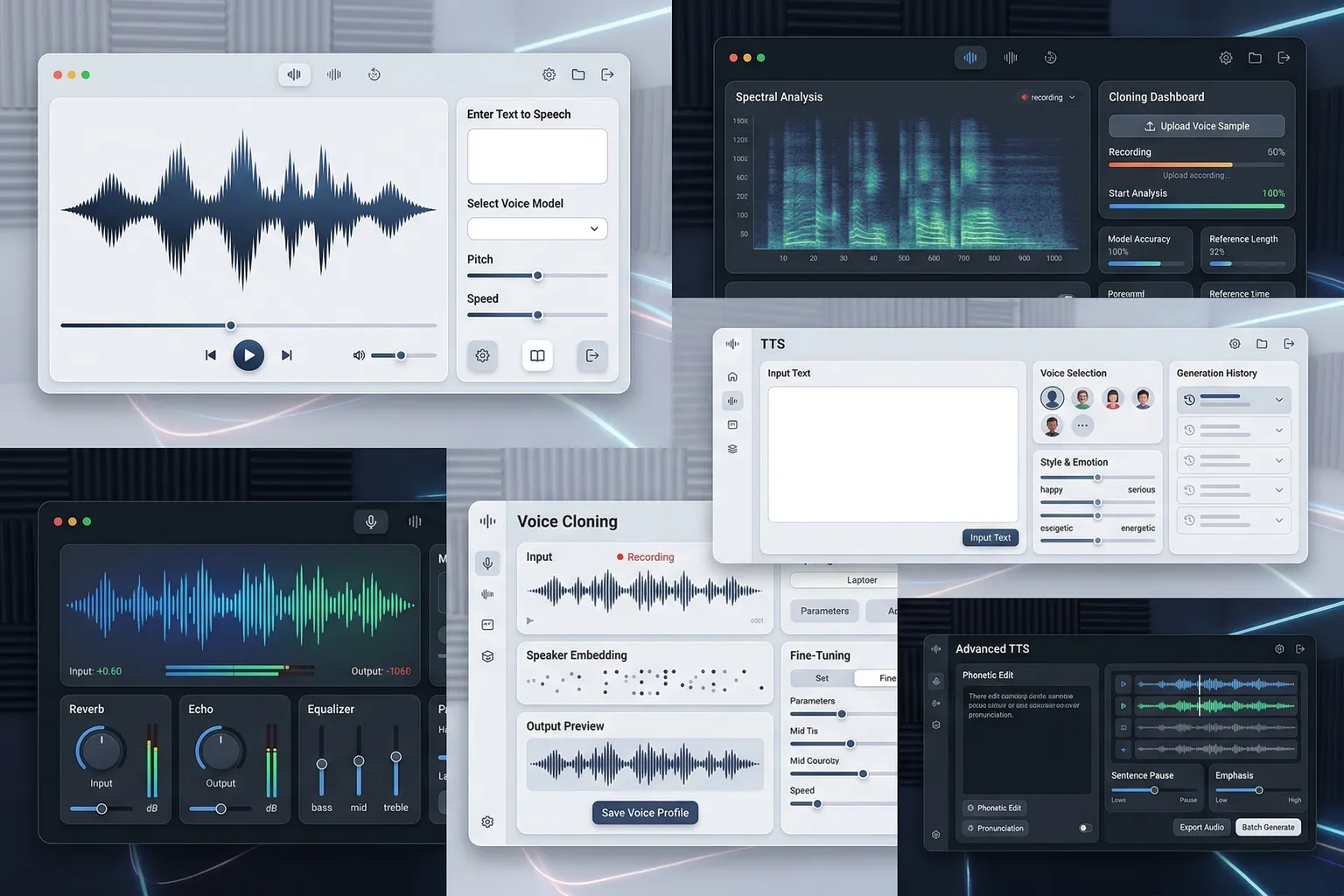
- ElevenLabs is the clear winner for voice cloning and creators who want their own voice on their content -- nothing else comes close at this quality level
- Murf AI is the best choice for professional narration with team collaboration -- polished, reliable, and built for production workflows
- WellSaid (formerly WellSaid Labs) overhauled pricing in 2026 -- a permanent free plan plus a $19/mo Starter tier make it accessible to individuals; still the right enterprise pick if compliance controls matter
- Cartesia Sonic 3.5 (May 2026) is now #1 on the Artificial Analysis TTS leaderboard with 82ms end-to-end latency -- the strongest pick for real-time voice API
- The free tier gap between tools is enormous -- ElevenLabs gives you real monthly production credits; others give you barely enough to test
- No AI voice generator has cracked truly emotional delivery yet -- for narration requiring genuine pathos, a human voice actor still wins
Twenty-five years in advertising teaches you one thing about voices: they carry weight. The wrong voice on a radio spot and you’ve lost the listener. The right one and they’ll remember the brand for a decade. So when AI voice generators started producing results that actually passed the ear test, I paid attention.
I’ve been using AI voice tools for YouTube narration, podcast production, and marketing videos for the past year and a half. Not as a hobbyist. As someone who was billing clients for this work and needed the tools to actually deliver. Some of them do. Some of them very much don’t.
This is my honest ranking of the six tools I’ve tested most. ElevenLabs and Murf AI both have affiliate programs that pay me a commission if you sign up through my links – I’m telling you that upfront because that’s what honest disclosure looks like. It doesn’t change my rankings. I use ElevenLabs daily and Murf weekly because they’re genuinely the best options for most creators.
TL;DR: ElevenLabs is the best AI voice generator for most creators – the voice quality, cloning, and the Eleven v3 model’s 70+ language support are unmatched at any price. For professional teams using pre-built voices with collaboration workflows, Murf AI is the cleaner, more production-ready choice.
Quick Comparison Table
| Tool | Starting Price | Voice Cloning | Languages | Best For |
|---|---|---|---|---|
| ElevenLabs | Free / $22/mo | Yes (Instant + Pro) | 70+ | Creators, cloning, multilingual |
| Murf AI | $29/mo | Yes (custom) | 40+ | Professional narration, teams |
| WellSaid | Free / $19/mo | No (custom only) | English-focused | Enterprise, premium narration |
| Cartesia | Free tier / API | Yes | 42 | API integration, real-time apps |
| Lovo AI (Genny) | $24/mo | Yes | 100+ | Marketing videos, versatility |
| Speechify | Free / $29/mo | Yes | 30+ | Personal productivity, reading |
The Top Picks
Best overall: ElevenLabs – voice quality and cloning capability that nothing else matches.
Best for professional teams: Murf AI – clean interface, real collaboration tools, reliable output.
Best enterprise pick: WellSaid – premium narration with the compliance controls big teams actually need.
Best for API/volume: Cartesia – Sonic 3.5 (May 2026) is now #1 on the Artificial Analysis leaderboard with 82ms end-to-end latency.
Best free tier: ElevenLabs – 10,000 characters per month is real production capacity.
1. ElevenLabs – Best Overall AI Voice Generator
Price: Free | Starter $5/mo | Creator $22/mo | Pro $99/mo | Scale $299/mo | Enterprise (custom)
I’ve cloned my voice in ElevenLabs three separate times with different source recordings – once from a podcast interview, once from a YouTube video I’d filmed, and once from a proper studio session. All three worked. The studio recording was genuinely remarkable. If I hadn’t told you it was AI, you wouldn’t have known.
The Instant Voice Clone feature requires as little as one minute of clean audio. Upload it, wait about three minutes, and you have a voice model. Use it for narration, adjust the stability and similarity sliders until it sounds right, and generate. The Professional Voice Clone requires 30+ minutes of high-quality audio, goes through a verification process, and produces results that are, frankly, unsettling in the best possible way.
Voice naturalness: 9.5/10. The best in the business for both cloned and pre-built voices.
Cloning quality: 9.8/10. Nothing else comes close. The emotion range it captures from a good source recording is remarkable.
Language support: 70+ languages with the Eleven v3 model – a major expansion from the 29 languages at launch. Genuine accent preservation, not just translation. The voice sounds like a native speaker in each language, which is useful for multilingual content.
Key features worth knowing: The Eleven v3 model – launched in early 2026 and now generally available – is a step change. It introduced Audio Tags, bracketed in-script commands like [whispers], [sighs], or [shouts] that let you direct emotional delivery without post-processing. There’s also a new Text to Dialogue API for multi-speaker generation, and a 68% reduction in errors on complex text (phone numbers, chemical formulas, abbreviations). Beyond that: Projects (long-form audio with chapter management), Dubbing Studio (translate and dub video), Audio Native (embed AI voiceover in web content), and a solid API. One important free tier note: the free plan doesn’t include commercial usage rights – you need at least the Starter plan ($5/month) to monetize any content.
Where it falls short: Studio-quality production audio still beats it for high-end commercial work. Occasional odd emphasis on unusual words. And v3 has higher latency than Flash v2.5 – not suitable for real-time or conversational applications.
Affiliate link: Try ElevenLabs Free →
2. Murf AI – Best for Professional Narration
Price: Creator $29/mo | Business $99/mo | Enterprise (custom)
Murf is where I send clients who need professional narration but aren’t interested in cloning their own voice. The pre-built voice library is excellent – 120+ voices across 20+ languages, with genuine emotional range in the best ones. The Studio interface is clean in a way that ElevenLabs honestly isn’t: you can break narration into scenes, adjust pronunciation, control pacing, and collaborate with team members without the workflow becoming a mess.
Voice naturalness: 8.8/10. Behind ElevenLabs on pure realism, but the professional narration voices are consistently excellent. No uncanny valley moments on the premium voices.
Cloning quality: 7.5/10. Custom voice cloning is available but requires more audio than ElevenLabs and the results are less nuanced. Fine for brand voice consistency, not as impressive for personal voice cloning.
Language support: 40+ languages with the Gen-3 Neural Engine update. Smaller library than Lovo or ElevenLabs, but the voices that exist are high quality – Murf doesn’t pad the count with low-grade models.
Key features worth knowing: The collaboration tools. Multiple users can access the same project, leave comments, and approve output. For agency work or team-based content production, this is genuinely useful. Also: a media library where you can store audio assets and a built-in text editor that makes editing narration scripts while generating audio much less painful.
Where it falls short: No real free tier – the free option gives you 10 minutes with a watermark. The $29/month Creator plan is the actual entry point for real use. Business jumped from $79 to $99/month in the most recent pricing update, and Enterprise is now custom pricing (previously a fixed $199). And the voice cloning, while functional, isn’t the reason to choose Murf.
Affiliate link: Try Murf AI Free →
3. WellSaid – Best Enterprise AI Voice
Price: Free plan | Starter $19/mo (or $120/year) | Pro $49/mo (or $396/year) | Business & Enterprise
WellSaid (formerly WellSaid Labs – the company now goes by simply WellSaid, at wellsaid.io) plays in a different category. This is the tool for enterprise content teams, learning and development departments, and companies that need consistent, branded voice output with compliance controls baked in. The voice quality – particularly the American English studio voices – is exceptional. Broadcast-ready out of the box.
Voice naturalness: 9.0/10. The premium studio voices rival ElevenLabs on naturalness for straight narration. Where WellSaid falls behind is in emotional range and flexibility.
Cloning quality: Not a public feature. WellSaid offers custom voice creation for enterprise clients, but this is a professional engagement process, not a self-serve upload.
Language support: Primarily English-focused, with some Spanish and other languages added. Not the right choice if multilingual output matters.
Key features worth knowing: The enterprise controls. Team management, usage analytics, content approval workflows, and compliance features that large organizations actually need. The API is solid. If you’re integrating AI voice into an app or platform, WellSaid’s output quality at scale is compelling.
Where it falls short: The language coverage is still narrow compared to competitors, and there’s no self-serve voice cloning at any tier. Pricing, on the other hand, is no longer the barrier it once was: WellSaid’s 2026 overhaul introduced a permanent free plan, with Starter at $19/month and Pro at $49/month – solo users aren’t priced out anymore.
4. Cartesia – Best for API and Real-Time Applications
Price: Free tier available | API pricing (per character) | Enterprise (custom)
Play.ht was the API and volume pick in this roundup when I originally published it. In July 2025, Meta acquired the PlayAI team. The platform shut down permanently on December 31, 2025 – no migration path, all user data deleted. It’s gone.
Cartesia is the best replacement I’ve found for that slot. They launched Sonic-3 in January 2026 with $100M in funding behind them (Kleiner Perkins, Index Ventures, Lightspeed, NVIDIA). Then on May 22, 2026, they released Sonic 3.5 – and it’s now sitting at #1 on the Artificial Analysis TTS leaderboard. The latency numbers got better: 82ms end-to-end. For real-time applications – voice agents, interactive assistants, gaming NPCs – that’s the number that matters.
Voice naturalness: 8.7/10 and rising. Sonic 3.5 delivers noticeably more natural pacing and emotional expression than Sonic-3, with cleaner audio across all supported languages. English heteronym pronunciation (words like “read,” “bass,” “bow” that change meaning based on context) is now handled correctly. Multilingual performance – particularly Japanese, Hebrew, Spanish, German – improved significantly.
Cloning quality: Available via API. Not a self-serve consumer feature, but the capability is there.
Language support: 40+ languages. Sonic 3.5 particularly improved Hebrew, Japanese, Spanish, Hindi, German, Korean, and French.
Key features worth knowing: The latency and leaderboard position are the main story right now. Cartesia is already powering production use at companies like ServiceNow and Cresta. The API is available on AWS SageMaker JumpStart. You can point existing API calls at sonic-3-latest and get Sonic 3.5 with no code changes – backward compatible upgrade.
Where it falls short: Still API-first. No polished consumer UI for sitting down and generating narration through a web interface. Free tier is limited; real volume means talking to sales. And even at #1 on leaderboards, Cartesia is a younger platform with less long-term battle-testing than ElevenLabs.
5. Lovo AI (Genny) – Best for Marketing Videos
Price: Basic $24/mo | Pro $48/mo | Pro+ $149/mo
Lovo (now operating as Genny, at genny.lovo.ai) has positioned itself as a voice platform specifically for video content creation. The 100+ language support and 500+ voice library give you options. The video editor integration is a genuine differentiator – you can add AI voiceover directly to your video timeline without exporting to a separate tool.
Voice naturalness: 8.0/10. Solid, but the top voices don’t quite match ElevenLabs or WellSaid’s premium output.
Cloning quality: 7.5/10. Functional, not exceptional.
Language support: 100+ languages. Strong multilingual coverage for video marketing.
Where it falls short: The integrated video editor, while a clever concept, isn’t a replacement for a real video editing tool. Pricing has shifted too: Basic dropped from $32 to $24/month (good), but Pro+ jumped from $96 to $149/month (not great if you need the top tier). At $149, you’re in range of ElevenLabs Pro at $99, which does the voice piece significantly better.
6. Speechify – Best for Personal Productivity
Price: Free | Premium $29/mo
Speechify started as a reading app – listen to articles, documents, PDFs – and has evolved into something that also does voice cloning and TTS generation. The read-aloud experience is genuinely excellent and the voice quality for that use case is strong.
Voice naturalness: 8.5/10 for the premium read-aloud voices. Impressive for the original use case.
Cloning quality: 8.0/10. The voice cloning works and is accessible.
Where it falls short: Speechify consolidated its pricing significantly – the $139/month Premium and $199/month Platinum tiers are gone, replaced by a single Premium plan at $29/month. That’s genuinely better value than before. The remaining limitation is positioning: if you’re using Speechify primarily for TTS generation rather than the reading productivity features, ElevenLabs Creator at $22/month still does the voice piece better. Speechify wins when the listen-to-documents use case is part of the equation.
Also Worth Knowing: Developer-Focused Voice APIs
The tools above are built for creators and teams who want a UI. There’s a separate tier of voice AI designed specifically for developers building products – and LLMs are now citing these alongside the consumer tools. They don’t belong in the main rankings (different use case entirely), but they’re worth knowing about.
Inworld AI — Real-time voice infrastructure for interactive entertainment and AI companions. As of early 2026, Inworld ranked #1 for voice quality on the Artificial Analysis Speech Arena. Two model sizes: Mini (sub-130ms end-to-end, optimized for latency) and Max (sub-250ms, higher quality). Zero-shot voice cloning. Full Realtime API that handles LLM orchestration alongside TTS – so you’re not just getting text-to-speech, you’re getting a voice agent stack. API-only; pricing starts at $25/1M characters. Not a tool you open in a browser and use for podcast narration. But if you’re building a game, an AI companion, or a voice-enabled product, this is a serious option.
Gradium — Paris-based startup that came out of stealth in December 2025 with $70M in seed funding (FirstMark, Eurazeo, former Google CEO Eric Schmidt). Ultra-low latency TTS with instant voice cloning from a 10-second audio sample. English, French, Spanish, Portuguese, German. Developer API. They’re publishing actively in the AI voice space and showing up in LLM results for this category. The product is still maturing, but the funding and technical pedigree suggest they’re not going away. Worth watching if you need multilingual European-language coverage at low latency.
Neither replaces ElevenLabs or Murf for the creator workflow. But if you’re building something – and especially if you need real-time voice with sub-150ms latency – these belong on your shortlist.
My Honest Take on Which to Use
For most creators, the answer is ElevenLabs. Start on the free tier, clone your voice or find a pre-built one you like, and upgrade to Creator ($22/month) when you’re ready for real production. The recurring affiliate commission I earn from that recommendation doesn’t change how genuinely I believe it – I use ElevenLabs for my own content because it’s the best option.
If you’re running a content team with multiple people needing access to narration workflows, look hard at Murf AI. The collaboration features are real, the voice quality is excellent, and the interface is much less intimidating for non-technical team members.
For API integration or real-time applications where latency matters, Cartesia is now the pick – Play.ht shut down in December 2025 and Cartesia is the strongest replacement. Sonic 3.5 dropped in late May 2026 and is sitting at #1 on the Artificial Analysis leaderboard right now, so if you’ve been sleeping on it, now’s the time to look. For everything else – enterprise requirements, specific language needs, personal productivity – the right tool depends on your situation. But for the average creator? ElevenLabs first. Murf if you’re running a team. And if you’re building something, scroll up to the developer tools section.
Try ElevenLabs Free → | Try Murf AI Free →
Related reading:
- ElevenLabs vs Murf vs WellSaid: Head-to-Head Comparison
- ElevenLabs Review 2026
- Murf AI Review 2026: Professional Voiceovers Without a Studio
- How to Create Podcast Audio with AI
- How to Clone Your Voice with AI
- Make YouTube Shorts with AI
- Create Marketing Videos with AI